

Cash is the spending nothing records for you: no bank SMS, no statement, no app that can see it on its own. The only method that works is to record each cash payment at the moment you pay, in one line, and to look at the totals once a week. Here is how to do that without it taking over your day.
Why cash is the hard part
In the World Bank's Global Findex survey, 5.2% of adults in Egypt made a digital merchant payment in 2024. That is a share of people, not of purchases, but it means most day-to-day spending is cash. And an app that reads bank SMS sees card payments only — the comparison of expense apps in Egypt has the details. Cash has to be typed or said.
Where cash goes without anyone noticing
- The market: vegetables, fruit, bread.
- The kiosk: cigarettes, water, snacks, phone top-ups.
- Transport: microbus, tuk-tuk, taxi.
- Tips, the doorman, the garage attendant.
- Delivery orders paid at the door.
- The children's daily pocket money.
None of these is large on its own. The problem is that they repeat every day, and nobody adds them up.
The method
- Record as you pay. Before the change is back in your bag, not at night from memory. Say it or type one line: “vegetables 150”.
- Amount and item, nothing else. No notes, no shop name. A long entry is what makes you put it off.
- Do one full week without cutting anything. You are measuring, not fixing.
- At the end of the week, look at each category's total and see which number is larger than you expected.
An example week
An example with round numbers, not a real household:
| Category | Week total (EGP) |
|---|---|
| Market and groceries | 900 |
| Transport | 350 |
| Kiosk | 220 |
| Delivery at the door | 300 |
| Tips | 80 |
| Total | 1,850 |
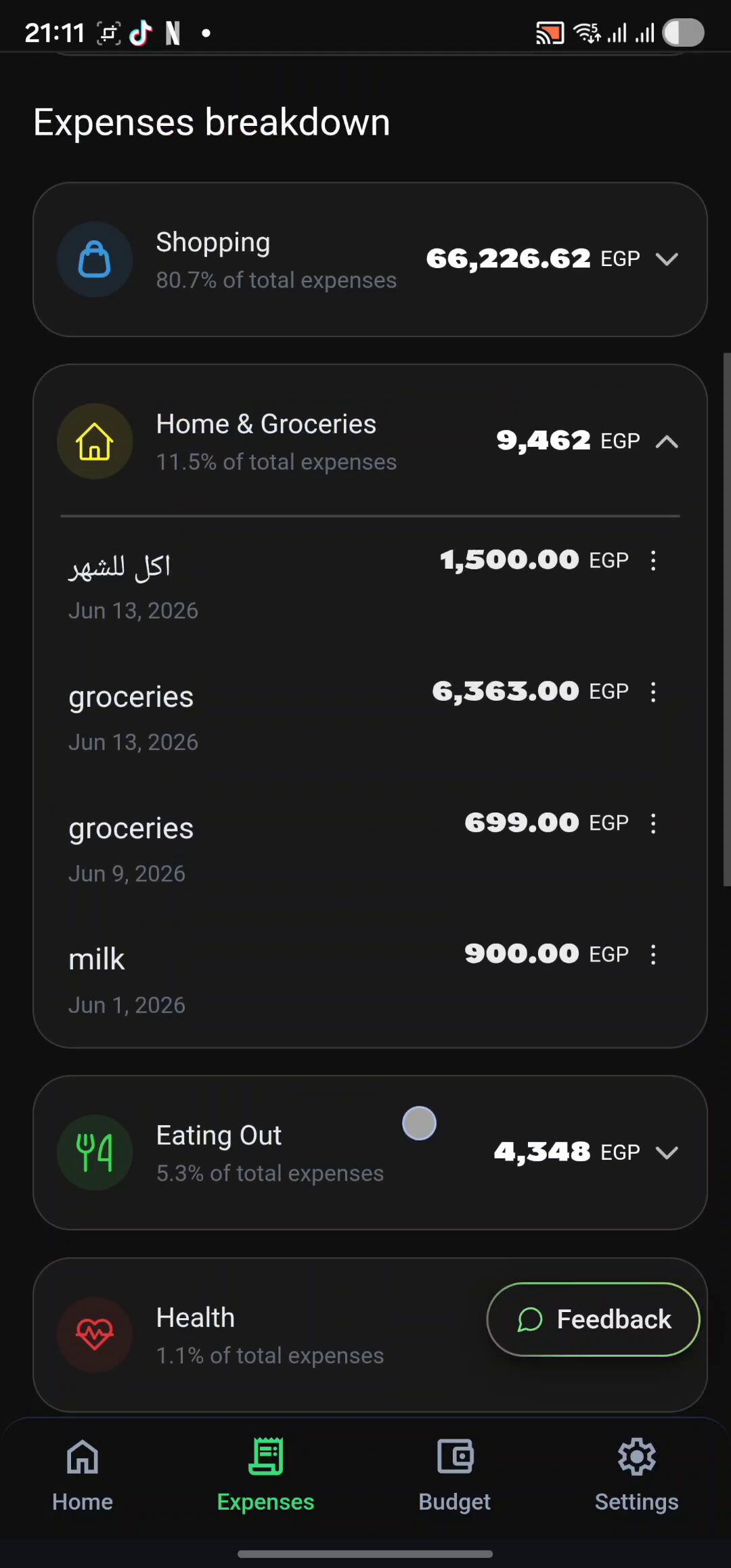
What to do with the totals
Pick one category that came out larger than you expected and give it a limit for next month. Not all of them; one. If you have no budget at all yet, a monthly household budget from scratch starts from a week of numbers like these.